
Introduction
Bringing home a puppy is one of life’s happiest moments. Their tiny paws, playful energy, and endless curiosity can instantly brighten your home. But along with those adorable moments comes one unavoidable challenge—potty training.
The good news?
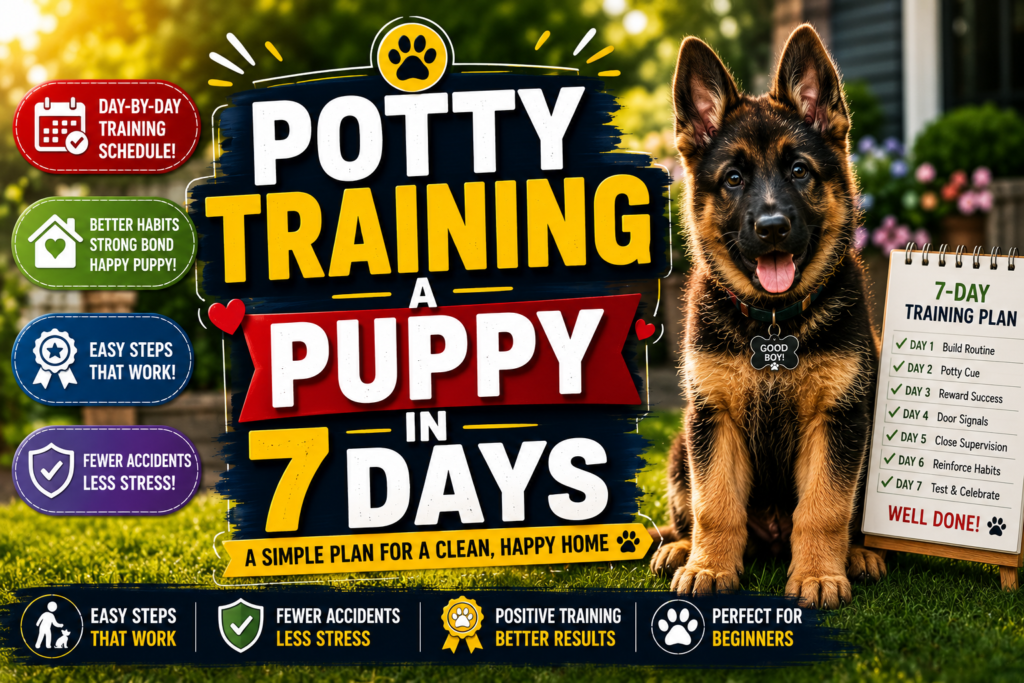
Potty Training a Puppy in 7 Days is absolutely possible for many puppies when you use the right routine, consistency, and positive reinforcement. While every puppy learns at a different pace depending on age, breed, and previous experiences, the first seven days are the most important foundation for creating lifelong bathroom habits.
Instead of relying on punishment or outdated training methods, this guide uses science-backed techniques recommended by professional trainers and veterinarians. You’ll learn exactly what to do each day, why accidents happen, and how to help your puppy understand where they should go.
By the end of this guide, you’ll have a clear daily training plan that makes housebreaking far less stressful—for both you and your furry friend.
Potty Training a Puppy in 7 Days
Potty Training a Puppy in 7 Days
Potty Training a Puppy in 7 Days
Why Potty Training Matters
Potty Training a Puppy in 7 Days
Potty training isn’t just about keeping your floors clean.
It teaches your puppy:
- Self-control
- Routine and discipline
- Confidence
- Communication with owners
- Healthy bladder habits
A puppy that understands bathroom routines adapts faster to family life and experiences less anxiety.
Can You Really Potty Train a Puppy in 7 Days?
Potty Training a Puppy in 7 Days
Here’s the honest answer.
Yes—but with realistic expectations.
Seven days usually means your puppy learns:
- where to potty
- when to potty
- how to signal they need to go
- basic house rules
Complete reliability often takes 4–8 weeks, especially for puppies younger than 12 weeks because their bladder muscles are still developing.
Think of the first week as building a strong habit rather than achieving perfection.
Puppies Learn Through Repetition, Not Punishment Potty
Many first-time owners believe puppies intentionally have accidents.
They don’t.
Young puppies simply don’t yet understand:
- what “outside” means
- how long to hold their bladder
- where the bathroom should be
Every successful potty trip teaches them far more than any punishment ever could.
Understanding Your Puppy’s Bladder
Potty Training a Puppy in 7 Days
Before creating a schedule, it’s important to understand what your puppy is physically capable of.
| Puppy Age | Average Bladder Control |
|---|---|
| 8 Weeks | 2 Hours |
| 10 Weeks | 2–3 Hours |
| 12 Weeks | 3 Hours |
| 4 Months | 4 Hours |
| 5 Months | 5 Hours |
| 6 Months | 6 Hours |
Never expect a young puppy to “hold it” all day.
Frequent opportunities prevent accidents.
Supplies You’ll Need Before Starting
Training becomes much easier when you’re prepared.
Essential Checklist
Potty Training a Puppy in 7 Days
✅ Puppy treats
✅ Leash
✅ Crate
✅ Enzyme cleaner
✅ Puppy pads (optional)
✅ Clicker (optional)
✅ Water bowl
✅ Food bowl
✅ Timer
Why Crate Training Makes Potty Training Faster
Dogs naturally avoid soiling where they sleep.
When introduced properly, a crate becomes your greatest potty-training tool.
A properly sized crate:
- encourages bladder control
- prevents hidden accidents
- builds routine
- improves sleep
Avoid oversized crates.
If there’s enough room for sleeping and using the bathroom, the training benefit disappears.
The Golden Potty Rule
Potty Training a Puppy in 7 Days
Take your puppy outside:
- Immediately after waking up
- After eating
- After drinking
- After playtime
- After naps
- Before bedtime
- Every 1–2 hours
Missing just one potty break often leads to accidents indoors.
Common Signs Your Puppy Needs to Potty
Learning body language speeds up training dramatically.
Watch for:
- sniffing the floor
- walking in circles
- sudden wandering
- pacing
- whining
- scratching at doors
- stopping play unexpectedly
The moment you notice these signs—
Go outside immediately.
Your 7-Day Potty Training Plan
Potty Training a Puppy in 7 Days
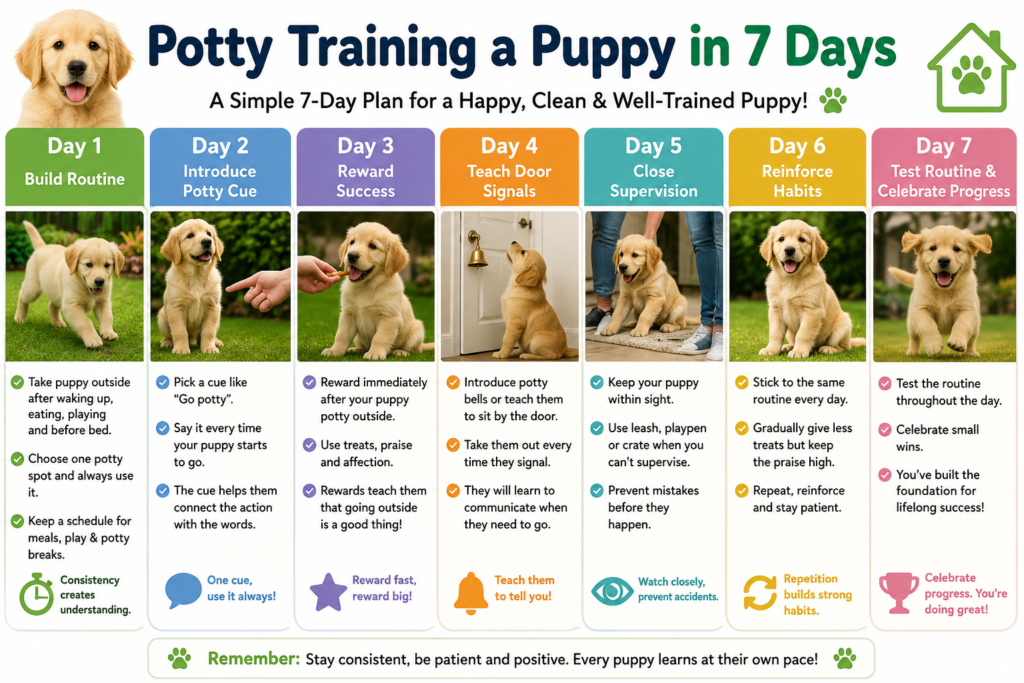
Day 1: Build the Routine, Potty Training a Puppy in 7 Days
Today isn’t about perfection.
It’s about creating structure.
Wake your puppy at the same time every morning.
Take them directly outside before breakfast.
Choose one bathroom location and always use that same spot.
The familiar scent encourages future success.
When your puppy finishes, immediately reward them with:
- praise
- treats
- affection
Reward within 2–3 seconds.
Waiting longer weakens the connection.
Today’s Goal
Teach:
Outside = Bathroom = Rewards
Feeding Schedule Matters
Free feeding creates unpredictable bathroom habits.
Instead:
Breakfast
Lunch
Dinner
Same times every day.
Regular meals create regular potty times.
Day 2: Introduce the Potty Cue
Once your puppy begins eliminating, calmly say:
“Go potty.”
or
“Do your business.”
Repeat the same phrase every time.
Eventually the cue becomes associated with the action.
This becomes incredibly useful before:
- bedtime
- car rides
- vet visits
- travel
Should You Use Puppy Pads?
This depends on your lifestyle.
Puppy Pads Work Well If
- you live in an apartment
- vaccinations aren’t complete
- severe weather prevents outdoor trips
Skip Pads If
You want your puppy to learn outdoor potty habits immediately.
Pads sometimes confuse puppies because they learn:
Indoor floor = acceptable bathroom.
Day 3: Increase Independence
Potty Training a Puppy in 7 Days
By now your puppy should begin anticipating bathroom trips.
Instead of carrying them every time, let them:
- walk to the door
- follow your lead
- recognize the routine
Begin waiting quietly.
Avoid distracting them with talking or playing.
Potty time is business time.
Positive Reinforcement Works Better Than Punishment
Potty Training a Puppy in 7 Days
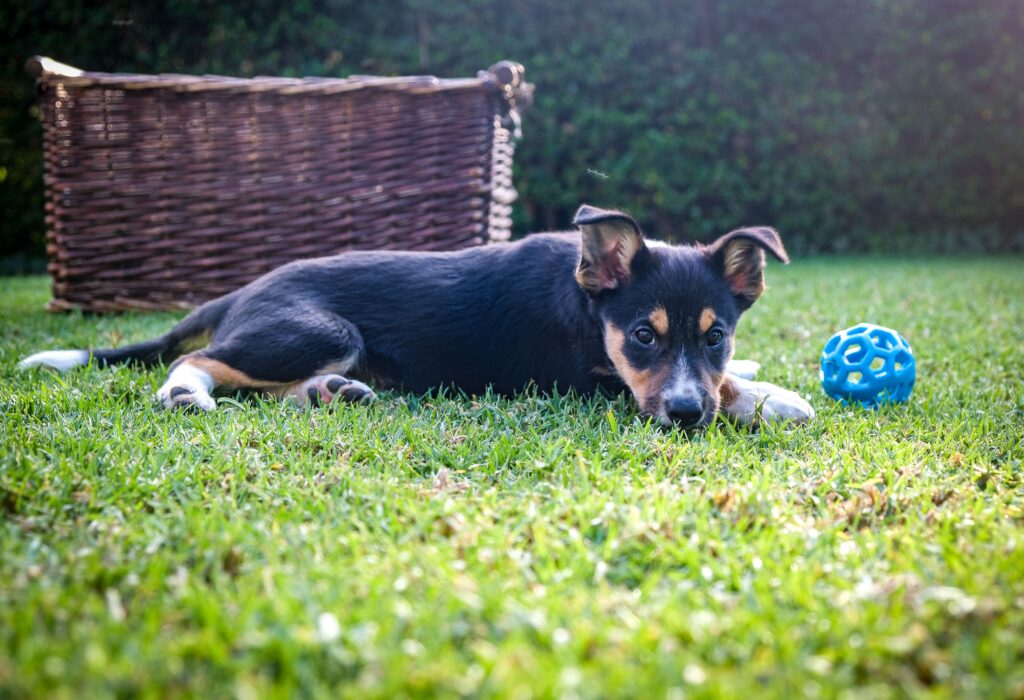
Imagine learning a new language.
Someone yells every time you make a mistake.
Would you learn faster?
Probably not.
Puppies respond the same way.
Instead:
Reward success.
Ignore honest mistakes.
Clean thoroughly.
Move on.
Never Punish Accidents
Avoid:
❌ rubbing their nose
❌ yelling
❌ spanking
❌ frightening them
Punishment teaches only one thing:
Hide from humans when I need to pee.
That’s the opposite of what we want.
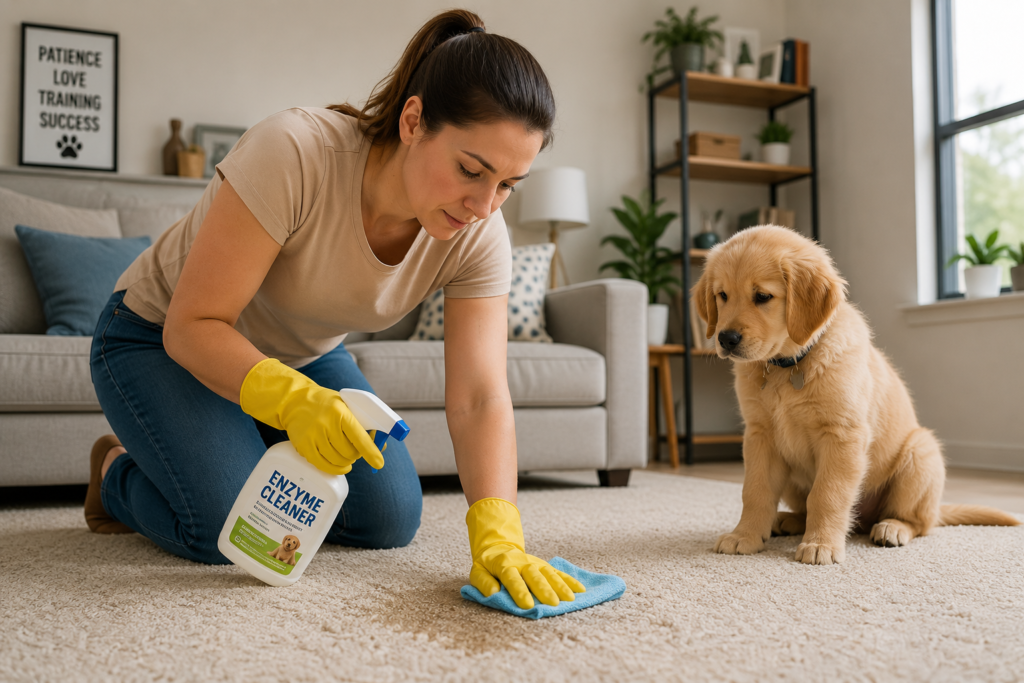
How to Clean Accidents Properly
Dogs can smell urine long after humans cannot.
Regular household cleaners often leave odor molecules behind.
Always use an enzymatic cleaner designed specifically for pet accidents.
These cleaners break down urine proteins completely, reducing repeat accidents.
Potty Training a Puppy in 7 Days
Day 4: Teach Door Signals
Around Day 4 many puppies begin understanding the routine.
Now teach communication.
Methods include:
- hanging potty bells
- sitting by the door
- scratching the door
- making eye contact
Every trip outside starts from the same door.
Consistency builds recognition.
Accidents Still Happening?
Don’t panic.
Ask yourself:
Did I wait too long?
Was my puppy excited?
Did they drink extra water?
Did I miss the warning signs?
Training failures are usually schedule problems—not stubborn puppies.
Breed Differences Matter
Some breeds learn faster than others.
| Easier | More Challenging |
|---|---|
| Labrador Retriever | Dachshund |
| Golden Retriever | Chihuahua |
| Border Collie | Shih Tzu |
| Standard Poodle | Beagle |
| German Shepherd | Basset Hound |
This doesn’t mean one breed is smarter.
Smaller dogs simply have smaller bladders.
Common Potty Training Mistakes
Many owners accidentally slow progress.
Avoid these mistakes:
- inconsistent schedules
- changing potty locations
- waiting too long between trips
- punishing accidents
- skipping rewards
- allowing too much freedom too early
- forgetting supervision
Consistency beats perfection every time.
Comparison Table
| Correct Habit | Common Mistake |
|---|---|
| Same potty spot | Different locations daily |
| Immediate rewards | Delayed praise |
| Fixed meal schedule | Free feeding |
| Supervision | Too much freedom |
| Enzyme cleaner | Household cleaner |
| Calm guidance | Punishment |
Key Takeaways So Far
By Day 4, your puppy should begin to:
- understand the bathroom location
- recognize your potty cue
- expect rewards
- develop a daily routine
- have fewer indoor accidents
Remember, progress isn’t always linear. Some puppies may have a great Day 3 followed by a messy Day 4—and that’s completely normal.
Day 5: Reduce Accidents Through Supervision
By Day 5, your puppy should start understanding that outside is the correct bathroom. Now it’s time to prevent mistakes before they happen.
Think of yourself as your puppy’s coach.
The more closely you supervise, the fewer opportunities your puppy has to practice bad habits indoors.
Use the “Umbilical Cord” Method
Many professional trainers recommend keeping your puppy close by using a lightweight leash attached to your waist or belt.
This allows you to:
- Notice potty signals immediately
- Prevent sneaking away to another room
- Reward good behavior quickly
- Strengthen your bond
If you can’t actively supervise your puppy, place them in their crate or a safe puppy playpen for short periods.
Freedom Is Earned, Not Given
One common mistake beginners make is allowing their puppy to roam the entire house too early.
Instead, gradually expand your puppy’s access.
A good progression looks like this:
| Training Progress | Freedom Level |
|---|---|
| Days 1–3 | One room only |
| Days 4–7 | Two rooms |
| Week 2 | Small supervised area |
| Week 3–4 | Larger supervised area |
| After consistent success | Full house access |
This approach dramatically reduces accidents and helps your puppy build reliable habits.
Day 6: Build Consistency
By now, your puppy should recognize the daily routine.
Continue taking them outside:
- First thing in the morning
- After every meal
- After drinking water
- After naps
- After play sessions
- Before bedtime
- Every 2–3 hours during the day (depending on age)
Keep using the same potty cue such as:
“Go potty.”
When your puppy finishes, reward immediately with treats and praise.
Consistency—not perfection—is what creates lasting habits.
Start Reducing Treats (But Not Praise)
Once your puppy begins going outside consistently, you don’t need to give treats every single time.
Instead:
- Continue praising enthusiastically.
- Give treats randomly to keep motivation high.
- Occasionally reward with a short play session.
This helps maintain good behavior without making your puppy dependent on treats alone.
Day 7: Test the Routine
Congratulations! You’ve reached Day 7.
Your puppy should now:
✅ Walk toward the door more often
✅ Understand the potty routine
✅ Have significantly fewer indoor accidents
✅ Respond to your potty cue
Remember that this is the beginning—not the end—of house training.
Continue following the same schedule for the next several weeks.
The habits built during this first week will become permanent with repetition.
Night-Time Potty Training
Nighttime can be challenging, especially for puppies younger than 12 weeks.
Tips for Better Nights
- Remove water about two hours before bedtime (unless advised otherwise by your veterinarian).
- Give your puppy one final potty break immediately before sleeping.
- Keep the crate close to your bed so you can hear them if they need to go out.
- Stay calm and quiet during nighttime potty trips.
- Return your puppy to bed immediately after they finish.
Avoid turning nighttime potty breaks into playtime.
Apartment Potty Training Tips
Living in an apartment doesn’t make potty training impossible.
It simply requires extra planning.
Helpful Strategies
- Use the elevator immediately when your puppy wakes.
- Keep treats in your pocket.
- Choose one outdoor potty location.
- If outdoor access takes too long, temporarily use puppy pads or a grass potty system until your puppy has completed vaccinations.
Consistency remains the most important factor.
How Long Does Potty Training Really Take?
Every puppy learns differently.
Here’s a realistic timeline.
| Puppy Age | Average Time to Become Reliable |
|---|---|
| 8–10 weeks | 8–12 weeks |
| 10–12 weeks | 6–8 weeks |
| 3–4 months | 4–6 weeks |
| 5–6 months | 2–4 weeks |
Remember:
The younger the puppy, the more patience you’ll need.
Troubleshooting Common Problems
Potty Training a Puppy in 7 Days
My Puppy Pees Immediately After Coming Inside
Your puppy may be too distracted outside.
Stay outdoors for an extra 5–10 minutes after they appear finished.
Walk around calmly before returning inside.
My Puppy Only Uses Puppy Pads
Gradually move the pad closer to the door each day.
Eventually place it outside before removing it completely.
My Puppy Has Frequent Accidents
Review your schedule.
Ask yourself:
- Are potty breaks frequent enough?
- Am I rewarding immediately?
- Am I supervising closely?
- Is everyone in the family following the same routine?
Consistency among all family members is essential.
My Puppy Never Signals
Many puppies don’t naturally signal at first.
Teach them using potty bells.
Each time you go outside, gently help your puppy touch the bells before opening the door.
Within a few weeks, many puppies begin ringing them independently.
When Should You Contact a Veterinarian?
Occasional accidents are normal.
However, consult your veterinarian if your puppy:
- Urinates excessively often.
- Cries while urinating.
- Has blood in the urine.
- Suddenly loses previously learned potty habits.
- Drinks unusually large amounts of water.
- Has persistent diarrhea lasting more than 24 hours.
Medical conditions such as urinary tract infections or intestinal parasites can interfere with house training.
Expert Tips for Faster Potty Training
Professional trainers often recommend these simple habits:
- Stick to a consistent feeding schedule.
- Use one designated potty spot.
- Reward within two seconds.
- Supervise closely indoors.
- Keep training sessions positive.
- Stay patient during setbacks.
- Clean accidents thoroughly with enzymatic cleaners.
- Celebrate every success.
Small, consistent actions produce the biggest results.
Frequently Asked Questions
Can a puppy really be potty trained in 7 days?
Many puppies can learn the basics in seven days, including where to potty and responding to a routine. However, complete reliability usually takes several additional weeks of consistent practice.
What age should potty training begin?
Start as soon as your puppy comes home, typically between 8 and 10 weeks of age.
Should I wake my puppy at night?
Very young puppies often need one or two nighttime potty breaks. As they mature, they gradually sleep through the night without needing to go outside.
Is crate training necessary?
A crate isn’t mandatory, but it is one of the fastest and most effective tools for preventing accidents and establishing a routine.
Should I punish accidents?
No.
Punishment often creates fear and confusion.
Instead, interrupt gently if you catch your puppy in the act, take them outside immediately, and reward them if they finish there.
Final Thoughts
Potty Training a Puppy in 7 Days isn’t about achieving perfection—it’s about building a strong foundation.
Some puppies learn incredibly quickly, while others need extra time. That’s completely normal.
Stay consistent, reward every success, and remember that accidents are part of the learning process, not signs of failure.
Your patience during these first seven days will lead to years of good habits and a happier relationship with your dog.
With the right routine, positive reinforcement, and realistic expectations, you’ll soon have a confident puppy that knows exactly where to go.
Related Articles (Internal Linking Suggestions)
Link naturally to related articles on CutePawWorld, such as:
- Best Puppy Toys for Aggressive Chewers
- Puppy Teething Guide: Signs, Timeline & Relief Tips
- Why Puppies Chew Furniture and Sofas (And How to Stop In 1 week)
- Best Dog Breeds for First-Time Owners
- How to Stop a Puppy from Biting (2026): 12 Proven Training Tips That Actually Work
- Don’t Miss The Ultimate Puppy Vaccination Schedule: Complete Guide 2026
Authoritative External References
For additional trusted information, consider linking to:
- American Kennel Club (AKC): House training and puppy care resources
- American Veterinary Medical Association (AVMA): Puppy health guidance
- American Animal Hospital Association (AAHA): Preventive veterinary care
- VCA Animal Hospitals: Puppy behavior and training articles
Conclusion
Potty training is one of the first and most important lessons your puppy will learn. By following a structured seven-day plan, staying patient, and rewarding positive behavior, you’ll create habits that last a lifetime. Every puppy progresses at a different pace, so don’t be discouraged by occasional setbacks. Keep the routine consistent, celebrate small victories, and enjoy the journey of helping your new companion grow into a well-trained and confident dog.
follow CutePawWorld on Pinterest for regular updates and inspiration.
Thankyou
Best Dog Toys for Puppies in 2027 – Safe, Fun, and Must-Have Picks for Happy Puppies