Introduction
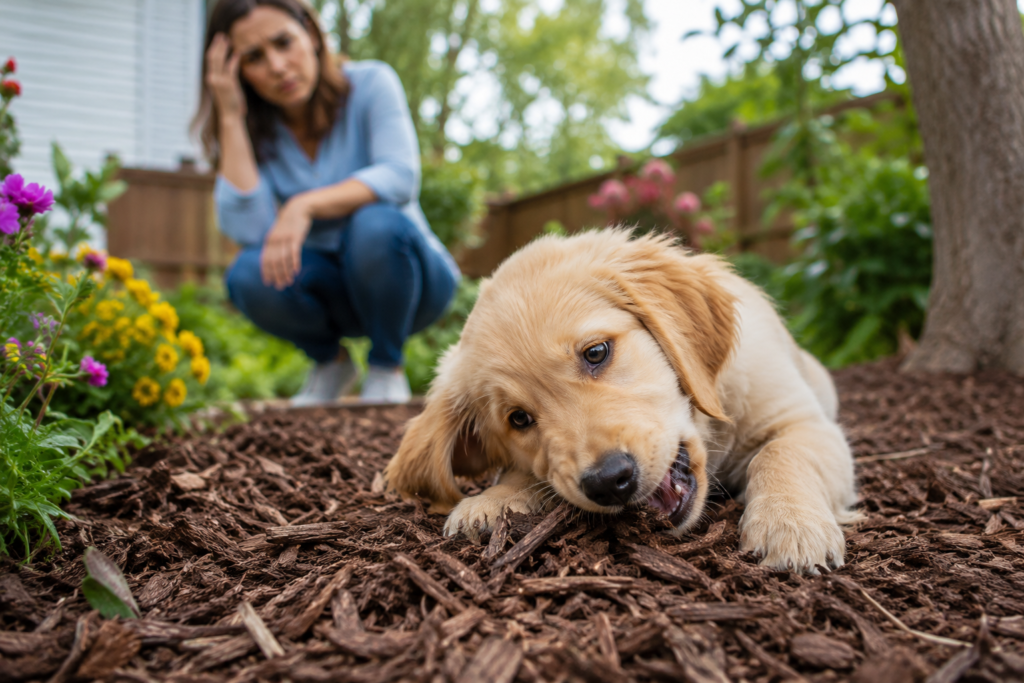
You let your puppy outside for just a few minutes, only to find them happily chewing wood mulch or digging up mouthfuls of dirt. At first, it may seem like harmless puppy curiosity. But if you’re asking yourself, “Why Is My Puppy Eating Mulch and Dirt?”, you’re not alone—and the answer is more important than you might think.
Many puppies explore the world with their mouths. While occasional sniffing and licking are normal, repeatedly eating mulch or soil can sometimes signal nutritional deficiencies, boredom, stress, digestive problems, or even an underlying medical condition. In some cases, mulch itself can become life-threatening, especially if it contains toxic cocoa mulch, fertilizers, pesticides, or mold.
Understanding Why Is My Puppy Eating Mulch and Dirt is the first step toward protecting your puppy’s health. The good news is that most cases can be managed once you identify the real cause.
In this comprehensive guide, you’ll learn:
- Why puppies eat mulch and dirt
- The hidden reasons most owners overlook
- Which types of mulch are dangerous
- Warning signs that require an emergency vet visit
- Proven solutions recommended by veterinarians
- Simple prevention tips that actually work
Let’s uncover what your puppy is trying to tell you before this habit turns into a serious health problem.
Why Is My Puppy Eating Mulch and Dirt
Why Is My Puppy Eating Mulch and Dirt
Why Is My Puppy Eating Mulch and Dirt
Why Is My Puppy Eating Mulch and Dirt
Why Is My Puppy Eating Mulch and Dirt
Why Is My Puppy Eating Mulch and Dirt
Why Is My Puppy Eating Mulch and Dirt
Why Is My Puppy Eating Mulch and Dirt
Is It Normal for Puppies to Eat Mulch and Dirt?
One of the first questions owners ask is, “Why Is My Puppy Eating Mulch and Dirt if they’re getting enough food?”
The answer depends on how often it happens.
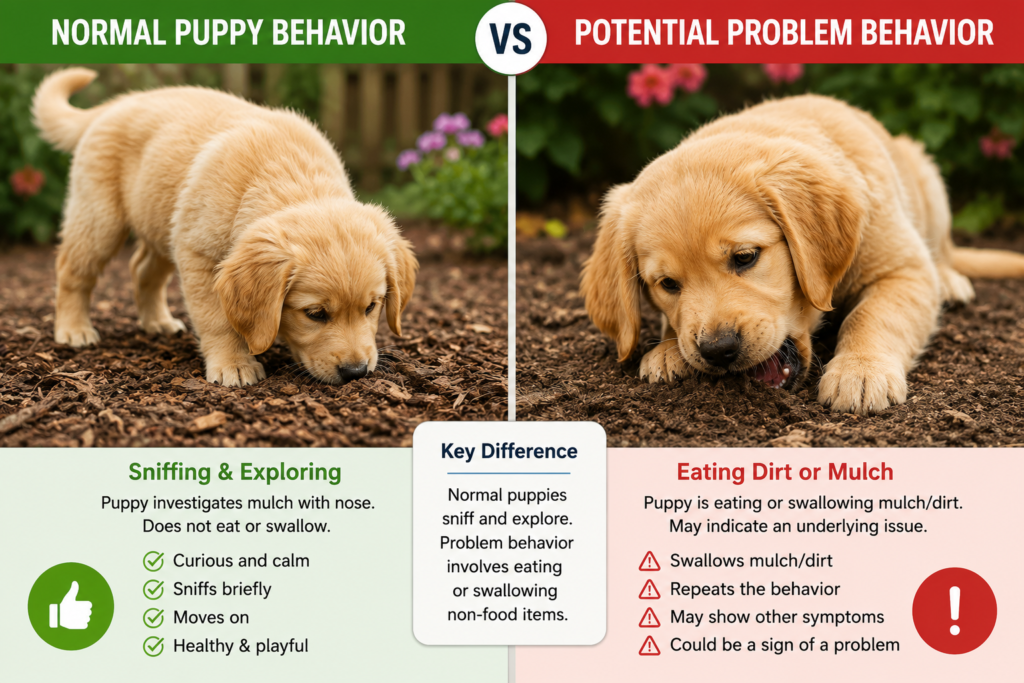
Young puppies investigate almost everything with their mouths. Similar to human babies, chewing is a normal part of learning about their environment.
Occasional behaviors include:
- Sniffing soil
- Carrying mulch pieces
- Digging in flower beds
- Licking grass
- Picking up sticks
These behaviors are generally harmless if your puppy quickly loses interest.
However, eating dirt or mulch repeatedly is different.
This behavior, known as pica, refers to repeatedly eating non-food items. Pica can indicate behavioral issues, nutritional deficiencies, gastrointestinal disease, parasites, or medical conditions that deserve attention.
The key question isn’t simply Why Is My Puppy Eating Mulch and Dirt, but how frequently they’re doing it and whether other symptoms are present.
Quick Comparison: Normal Curiosity vs Serious Problem
| Normal Puppy Behavior | Possible Medical Concern |
|---|---|
| Sniffs mulch occasionally | Eats dirt every day |
| Chews briefly then drops it | Swallows mulch repeatedly |
| Plays while digging | Constantly searches for soil |
| Healthy appetite | Loss of appetite |
| Energetic and playful | Lethargic or weak |
| Normal stools | Vomiting or diarrhea |
| Stops when redirected | Cannot stop eating dirt |
If your puppy consistently falls into the right-hand column, it’s time to investigate the underlying cause.
Warning Signs That Need Immediate Veterinary Care
Sometimes Why Is My Puppy Eating Mulch and Dirt isn’t the biggest concern—the complications are.
Seek veterinary care immediately if your puppy develops:
- Vomiting repeatedly
- Bloody diarrhea
- Severe constipation
- Swollen or painful abdomen
- Difficulty breathing
- Extreme lethargy
- Loss of appetite lasting over 24 hours
- Tremors or seizures
- Pale gums
- Collapse
These symptoms may indicate intestinal blockage, poisoning, severe infection, or another emergency.
Hidden Cause 1 – Natural Puppy Curiosity
The most common answer to Why Is My Puppy Eating Mulch and Dirt is surprisingly simple.
Puppies are naturally curious.
Unlike humans, dogs rely heavily on taste and smell to understand their surroundings. Every leaf, rock, flower, and piece of mulch offers new scents and textures.
Young puppies commonly:
- Taste bark
- Lick soil
- Chew leaves
- Carry sticks
- Dig for insects
This exploration usually decreases between six and twelve months as puppies mature.
How to Help
Instead of punishment:
- Redirect with a toy.
- Reward appropriate chewing.
- Supervise outdoor play.
- Teach the “Leave It” command.
- Offer safe chew toys.
Positive reinforcement works far better than yelling or physical correction.
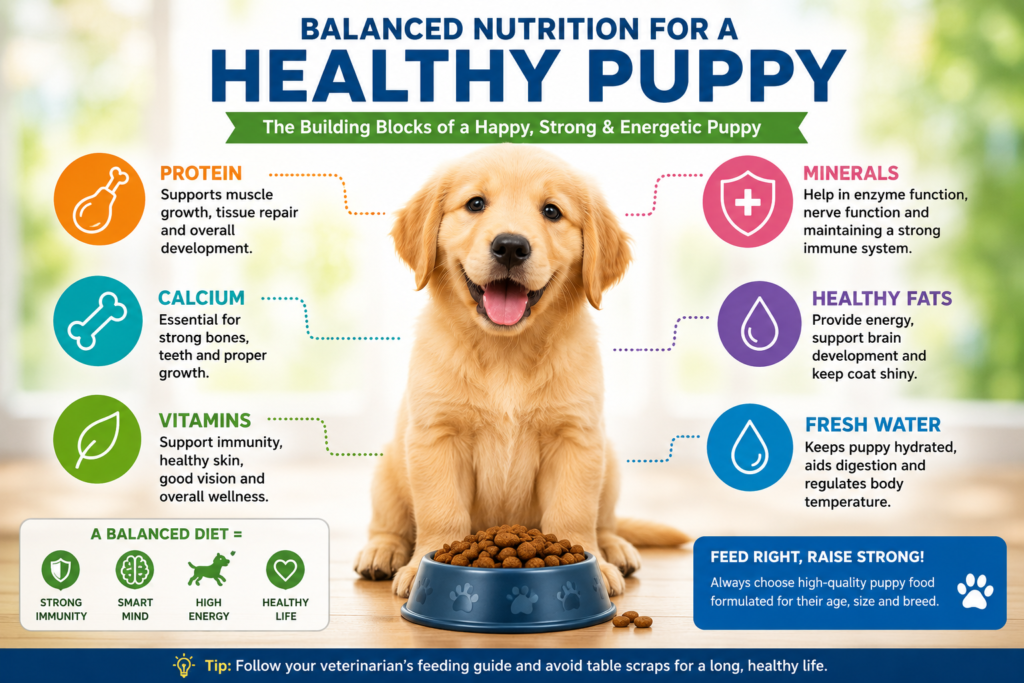
Hidden Cause 2 – Nutritional Deficiencies
If you’re still wondering Why Is My Puppy Eating Mulch and Dirt, nutrition should be high on your checklist.
Although uncommon in puppies eating a balanced commercial diet, deficiencies can occur due to:
- Poor-quality food
- Homemade diets lacking balance
- Malabsorption disorders
- Rapid growth
- Heavy parasite burdens
Low levels of certain nutrients may increase the urge to eat non-food materials.
Possible deficiencies include:
- Iron
- Zinc
- Calcium
- Magnesium
- Sodium
- Trace minerals
Additional Symptoms
- Poor coat quality
- Slow growth
- Weakness
- Low energy
- Brittle nails
- Weight loss
What You Should Do
Avoid giving supplements without veterinary guidance. Excess minerals can be just as harmful as deficiencies.
Instead:
- Feed an AAFCO-approved puppy food.
- Ensure the diet matches your puppy’s life stage.
- Schedule a veterinary examination if the behavior persists.
- Discuss blood tests if deficiencies are suspected.
Hidden Cause 3 – Boredom and Lack of Mental Stimulation
Sometimes the answer to Why Is My Puppy Eating Mulch and Dirt has nothing to do with nutrition.
It’s boredom.
High-energy breeds especially need daily physical and mental exercise.
Without enough stimulation, puppies invent their own entertainment:
- Digging
- Barking
- Destroying furniture
- Eating mulch
- Digging holes
- Chewing plants
Breeds particularly prone include:
- Labrador Retrievers
- Border Collies
- Australian Shepherds
- German Shepherds
- Belgian Malinois
- Jack Russell Terriers
Signs of Boredom
- Constant pacing
- Excessive barking
- Attention-seeking
- Zoomies indoors
- Destructive chewing
- Digging throughout the yard
Proven Solutions
Increase enrichment through:
- Puzzle feeders
- Snuffle mats
- Frozen food toys
- Daily walks
- Obedience training
- Hide-and-seek games
- Scent work
- Short play sessions throughout the day
A mentally tired puppy is much less likely to snack on mulch.
Hidden Cause 4 – Teething Pain
Why Is My Puppy Eating Mulch and Dirt
Teething usually begins around three to four months of age and continues until six to seven months.
During this period, puppies chew almost everything.
Wood mulch provides:
- Texture
- Resistance
- Cooling sensation
- Temporary gum relief
Unfortunately, swallowing wood chips can create serious intestinal problems.
Better Alternatives
Offer:
- Frozen carrots (in moderation)
- Puppy-safe rubber chew toys
- Frozen washcloths (supervised)
- Veterinary-approved teething toys
Avoid:
- Sharp sticks
- Pressure-treated wood
- Decorative bark
- Cocoa mulch
If teething is the reason behind Why Is My Puppy Eating Mulch and Dirt, replacing unsafe chewing options with safer alternatives often solves the problem.
Hidden Cause 5 – Digestive Problems
Digestive discomfort is another overlooked explanation for Why Is My Puppy Eating Mulch and Dirt.
Puppies experiencing nausea or stomach irritation may eat unusual materials in an attempt to relieve discomfort.
Possible digestive causes include:
- Gastritis
- Intestinal inflammation
- Food intolerance
- Parasites
- Dietary changes
- Gut imbalance
Other symptoms often include:
- Grass eating
- Lip licking
- Vomiting
- Loose stools
- Excessive drooling
- Loss of appetite
What Owners Should Do
Do not assume dirt helps settle your puppy’s stomach.
Instead:
- Keep fresh water available.
- Feed a consistent, high-quality puppy diet.
- Avoid frequent food changes.
- Collect a stool sample if diarrhea develops.
- Contact your veterinarian if symptoms last more than 24 hours.
Key Takeaways (Part 1)
Why Is My Puppy Eating Mulch and Dirt
| Hidden Cause | Common? | Serious? | Can Be Fixed? |
|---|---|---|---|
| Natural Curiosity | ✅ Very Common | Low | ✅ Yes |
| Nutritional Deficiency | Moderate | Medium | ✅ Yes |
| Boredom | Very Common | Low | ✅ Yes |
| Teething | Very Common | Low | ✅ Yes |
| Digestive Problems | Moderate | Medium | ✅ Yes |
Internal Links
- Why Puppies Chew Furniture and Sofas (And How to Stop In 1 week)
- Best Dog Breeds for First-Time Owners
- How to Stop a Puppy from Biting (2026): 12 Proven Training Tips That Actually Work
- Don’t Miss The Ultimate Puppy Vaccination Schedule: Complete Guide 2026
- Potty Training a Puppy in 7 Days: Amazing Tips For Guaranteed Success
- Signs Your Puppy Is Mentally Bored (Not Physically Tired): 15 Hidden Warning Signs
External References
For factual accuracy and additional reading, consider linking naturally within the article to:
- American Veterinary Medical Association (AVMA)
- Merck Veterinary Manual
- VCA Animal Hospitals
- American Kennel Club (AKC)
- Pet Poison Helpline
Hidden Cause 6 – Parasites Can Trigger Unusual Eating Habits
Internal parasites are another possible reason a puppy may start eating dirt or mulch. Roundworms, hookworms, whipworms, and giardia can interfere with digestion and nutrient absorption. Even puppies that appear healthy may have intestinal parasites, especially if they have not completed their deworming schedule.
Common Signs of Parasites
- Pot-bellied appearance
- Diarrhea or soft stools
- Weight loss despite eating well
- Scooting
- Dull coat
- Vomiting
- Low energy
What to Do
Schedule a fecal examination with your veterinarian. Routine deworming and parasite prevention are essential for growing puppies and can often resolve the behavior if parasites are the underlying cause.
Hidden Cause 7 – Stress or Anxiety
Why Is My Puppy Eating Mulch and Dirt
Not every puppy eats mulch because of hunger or curiosity. Emotional stress can also lead to unusual behaviors.
A puppy may feel anxious after:
- Moving to a new home
- Being separated from littermates
- Loud noises or fireworks
- Changes in routine
- Spending long hours alone
Some puppies develop repetitive behaviors such as chewing soil, mulch, or rocks as a coping mechanism.
How to Reduce Anxiety
- Keep a consistent daily routine.
- Provide regular exercise.
- Use reward-based training.
- Create a quiet sleeping area.
- Avoid punishment for unwanted behaviors.
If anxiety is severe, consult your veterinarian or a certified dog behaviorist.
Hidden Cause 8 – Attraction to the Smell of Mulch
Mulch often contains interesting scents that naturally attract dogs.
Depending on the material, mulch may smell like:
- Fresh wood
- Decaying leaves
- Mushrooms
- Compost
- Animal waste
- Fertilizer
These smells can encourage puppies to investigate and chew.
Unfortunately, not all mulch is safe.
Hidden Cause 9 – Learned Behavior
Sometimes puppies continue eating mulch simply because the habit has been unintentionally rewarded.
For example:
- The owner immediately gives attention.
- The puppy enjoys being chased around the yard.
- Digging becomes a fun daily game.
Over time, the behavior becomes a routine rather than a necessity.
Breaking the Habit
- Redirect immediately with a toy.
- Reward your puppy when they ignore mulch.
- Practice the “Leave It” command every day.
- Supervise outdoor play until the habit fades.
Consistency is the key to success.
Which Types of Mulch Are Dangerous?
Not all mulch is created equal.
| Mulch Type | Safe for Puppies? | Risk Level |
|---|---|---|
| Cedar mulch | Generally safer with supervision | Low |
| Pine bark mulch | Usually safe if not swallowed | Low |
| Hardwood mulch | Can cause intestinal blockage | Moderate |
| Dyed decorative mulch | May contain chemicals | Moderate |
| Cocoa mulch | Extremely dangerous | Very High |
| Moldy mulch | Can contain toxic molds | Very High |
Why Cocoa Mulch Is Dangerous
Cocoa mulch is made from cocoa bean shells and contains theobromine—the same toxic compound found in chocolate.
Ingesting cocoa mulch may cause:
- Vomiting
- Rapid heart rate
- Hyperactivity
- Muscle tremors
- Seizures
If you suspect your puppy has eaten cocoa mulch, contact your veterinarian immediately.
Serious Health Risks of Eating Mulch and Dirt
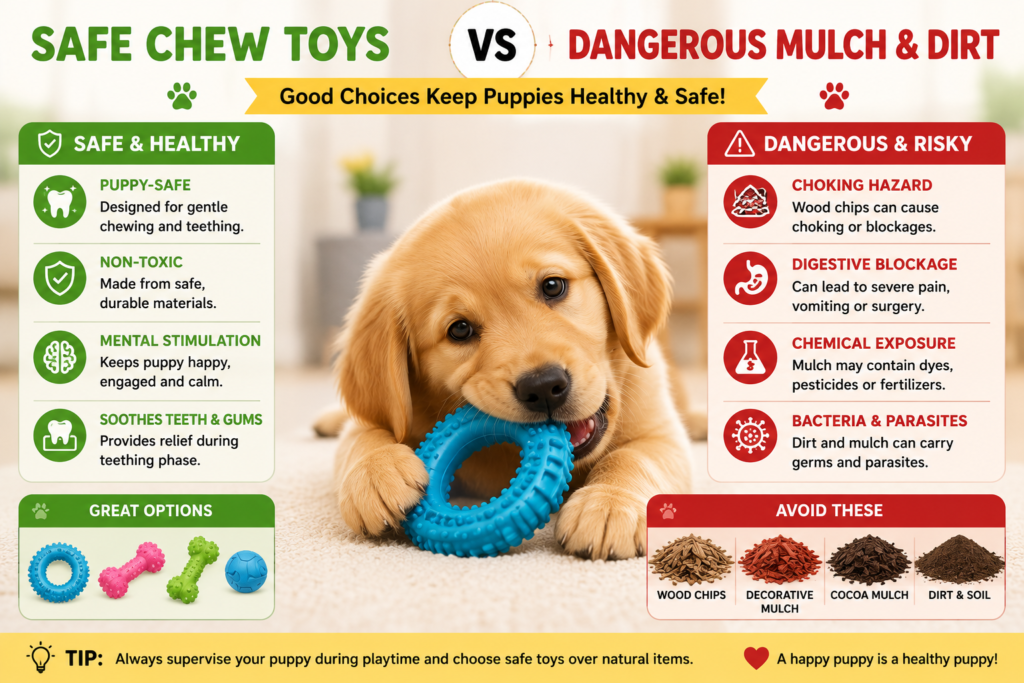
Although many cases are harmless, repeated ingestion can lead to serious complications.
1. Intestinal Blockage
Large wood chips can become lodged in the digestive tract, causing a life-threatening obstruction.
Signs include:
- Repeated vomiting
- Abdominal pain
- No bowel movements
- Loss of appetite
- Weakness
2. Poisoning
Mulch may contain:
- Fertilizers
- Herbicides
- Pesticides
- Mold toxins
These substances can be harmful even in small amounts.
3. Bacterial or Fungal Infections
Contaminated soil can expose puppies to harmful microorganisms and parasites.
4. Dental Injuries
Hard sticks and bark pieces may crack baby teeth or injure the gums.
5. Choking Hazard
Small puppies can accidentally inhale wood fragments, leading to choking or airway irritation.
How Veterinarians Diagnose the Problem
If the behavior continues, your veterinarian may recommend:
- Physical examination
- Diet review
- Fecal parasite testing
- Blood tests
- X-rays (if blockage is suspected)
- Ultrasound in complicated cases
Providing details such as how often your puppy eats mulch, what type of mulch is present, and any additional symptoms can help your veterinarian determine the cause more quickly.
Proven Solutions That Actually Work
The best treatment depends on the underlying cause, but these strategies help most puppies.
Improve Nutrition
- Feed a complete, balanced puppy diet.
- Avoid frequent diet changes.
- Provide fresh water at all times.
Increase Daily Exercise
Aim for age-appropriate activity, including walks, play sessions, and training games to reduce boredom.
Provide Safe Chewing Options
Offer:
- Puppy-safe rubber toys
- Food-stuffed toys
- Frozen teething toys
Rotate toys regularly to keep your puppy interested.
Supervise Outdoor Time
Until the habit is under control:
- Keep your puppy on a leash in the yard.
- Block access to garden beds.
- Remove loose wood chips when possible.
Teach the “Leave It” Command
Reward your puppy every time they choose to ignore mulch or dirt. Positive reinforcement builds reliable habits over time.
Prevention Checklist
✔ Feed a high-quality puppy food.
✔ Follow your veterinarian’s deworming schedule.
✔ Provide daily exercise and mental enrichment.
✔ Keep harmful mulch out of reach.
✔ Replace dangerous mulch with pet-friendly landscaping materials if needed.
✔ Schedule regular veterinary wellness visits.
✔ Redirect chewing to safe toys.
✔ Monitor outdoor play, especially in young puppies.
Frequently Asked Questions
Is it normal for puppies to eat dirt?
Occasional licking or tasting is common during exploration, but repeated eating should be investigated, especially if accompanied by vomiting, diarrhea, weight loss, or lethargy.
Can eating dirt make my puppy sick?
Yes. Dirt may contain parasites, bacteria, chemicals, or sharp objects that can cause illness or digestive problems.
What is pica in dogs?
Pica is a condition in which dogs repeatedly eat non-food items such as dirt, rocks, wood, paper, or fabric. It may have behavioral or medical causes and should be evaluated if persistent.
Should I stop my puppy from chewing mulch?
Yes. Even if the mulch itself is not toxic, swallowing wood chips can lead to choking, intestinal blockage, or stomach irritation.
When should I call a veterinarian?
Seek veterinary advice if your puppy:
- Eats mulch or dirt frequently.
- Vomits repeatedly.
- Has diarrhea lasting more than a day.
- Stops eating.
- Appears weak or painful.
- May have eaten cocoa mulch or chemically treated landscaping materials.
Final Thoughts
Most puppies eventually outgrow the habit of chewing dirt or mulch as they mature, especially when they receive proper nutrition, enrichment, and consistent training. However, persistent or excessive ingestion should never be ignored. It may be your puppy’s way of signaling boredom, digestive discomfort, parasites, stress, or another health concern.
By identifying the underlying cause early and taking practical steps to address it, you can protect your puppy from preventable health risks and encourage healthier lifelong habits.
Conclusion
Eating mulch or dirt is often a normal part of puppy curiosity, but frequent or excessive behavior may signal boredom, teething, nutritional deficiencies, parasites, digestive issues, or stress. While many puppies outgrow this habit, it’s important to monitor for warning signs like vomiting, diarrhea, lethargy, or loss of appetite and seek veterinary care if needed.
With a balanced diet, regular exercise, safe chew toys, positive training, and routine vet checkups, you can usually stop this behavior and keep your puppy healthy and safe.
Has your puppy been eating mulch or dirt? Share your experience in the comments below! If you found this guide helpful, explore more puppy care tips on CutePawWorld.com for expert advice on training, nutrition, and health.
📌 Follow Us on Pinterest for Daily Puppy Tips