Introduction: Is Your Puppy Turning Your Sofa Into a Chew Toy?
Why puppies chew furniture and sofa’s
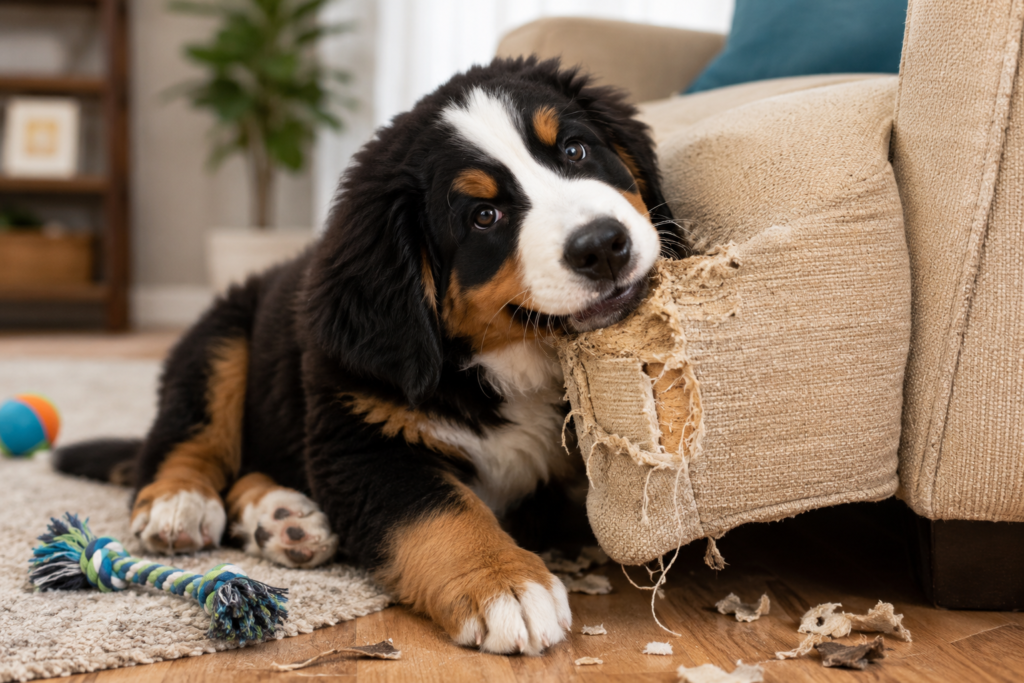
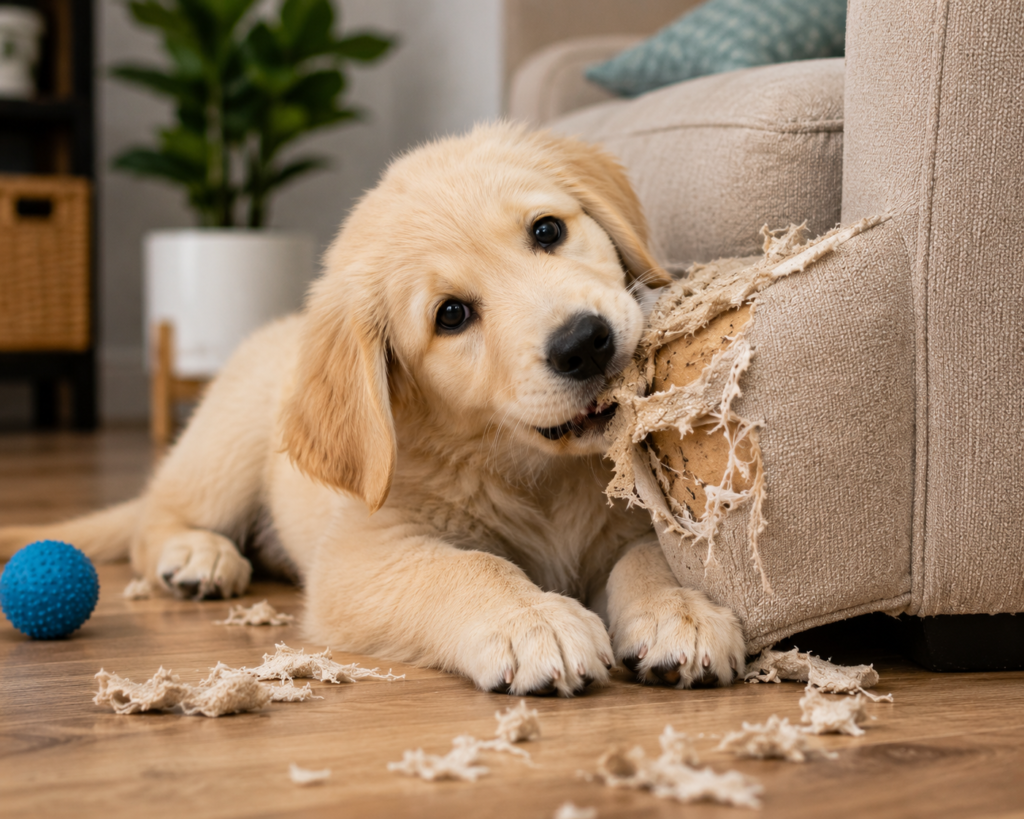
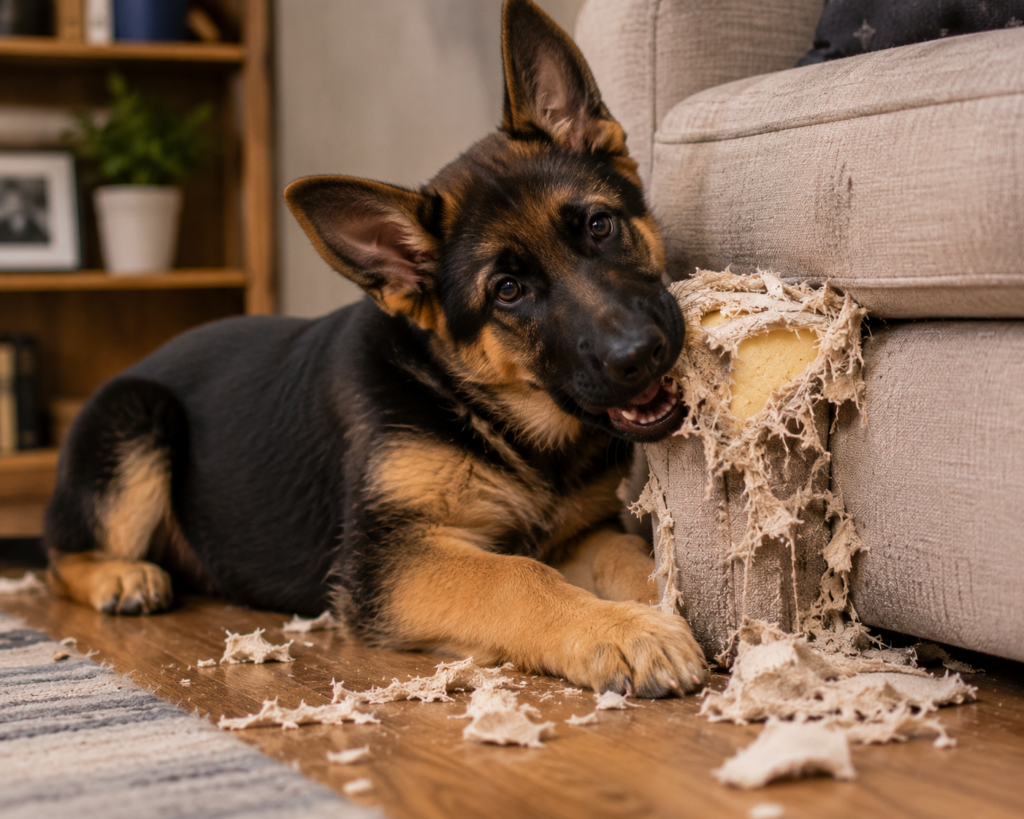
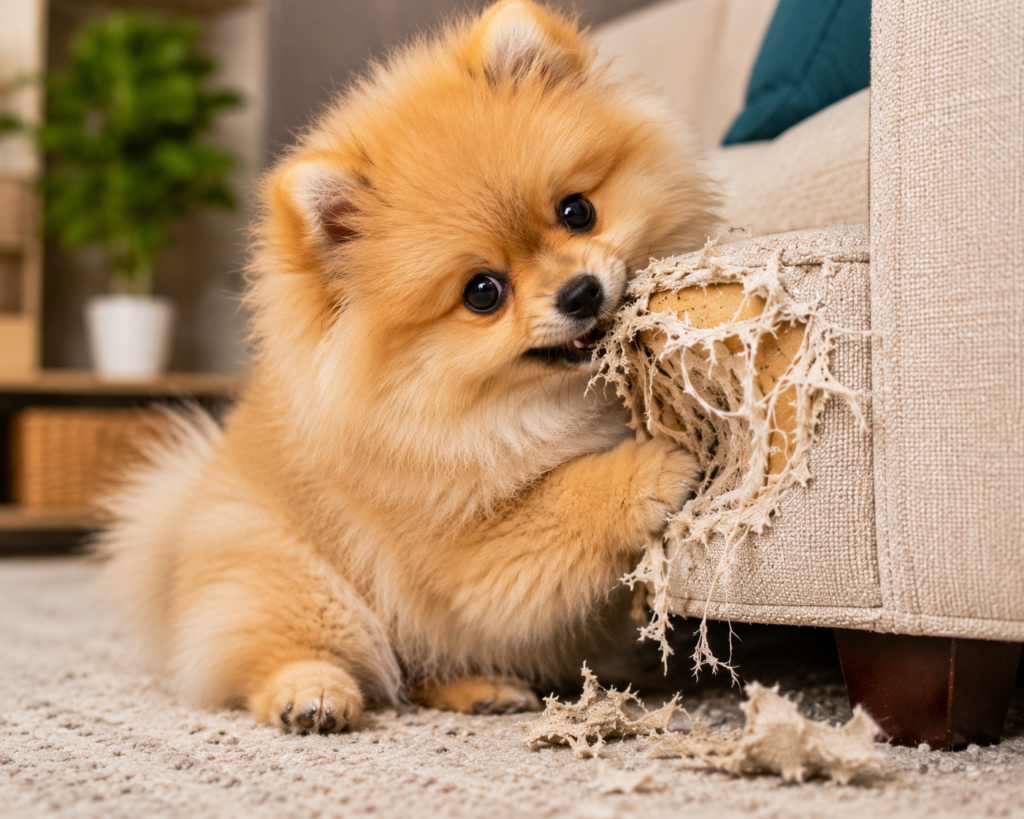
It always happen you walk into the living room and discover your new puppy happily chewing the corner of your expensive sofa. The table legs have teeth marks. A cushion is torn apart and you got anger. Sound familiar?
If you’re raising a puppy, destructive chewing is one of the most common challenges you’ll face. Many owners assume their puppy is being naughty, stubborn, or trying to get attention. In reality, chewing is a completely natural behavior.
The good news? Most puppies can be trained to stop chewing furniture surprisingly fast when you understand the real reason behind the behavior.
When we bring our new puppy we feel too much excited, but later we face many kind of problems like, Why Puppies Chew Furniture and Sofas
In this guide, I am going to explore why puppies chew sofas and furniture, compare normal chewing with problematic chewing, and provide practical solutions that work in real homes and puppy lovers that will make you easy for you.
this article will definitely help you to solve your problem why puppies chew furniture and sofa’s
Why Do Puppies Chew Furniture?
Chewing isn’t bad behavior—it’s puppy behavior.
According to experts from American Kennel Club and RSPCA, puppies explore the world with their mouths much like human babies use their hands.
Why puppies chew furniture and sofa’s Here are the most common reasons:
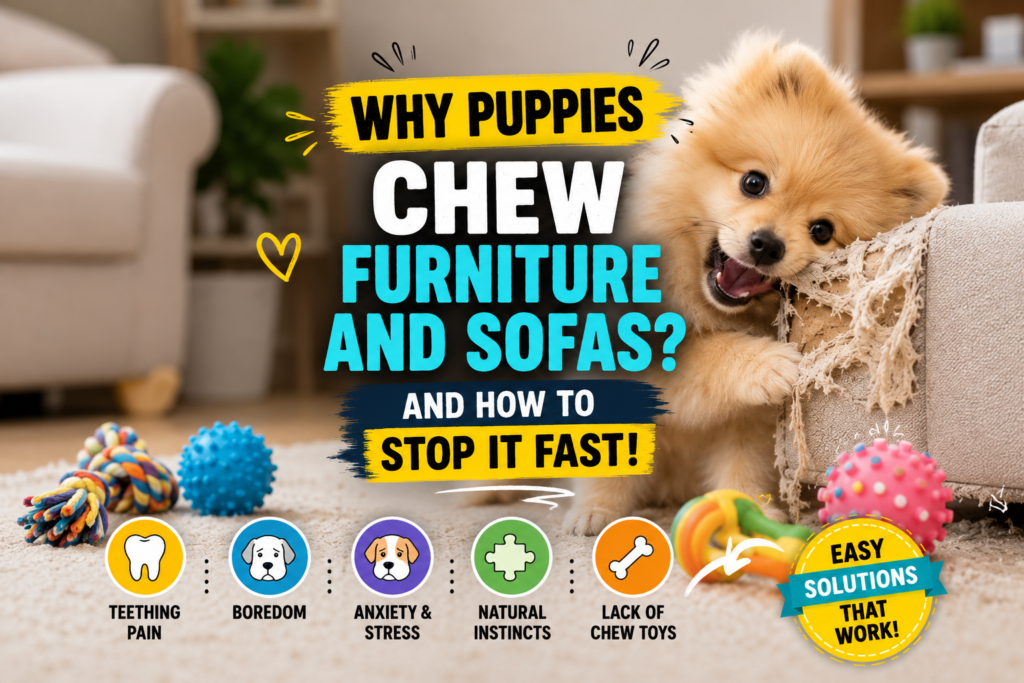
Why Puppies Chew Furniture and Sofas (And How to Stop It Fast)
1. Teething Pain
Why Puppies Chew Furniture and Sofas (And How to Stop It Fast)
Between 3 and 7 months of age, puppies go through teething.
During this stage:
Adult teeth push through the gums.
Gums become sore and irritated.
Chewing provides relief.
Unfortunately, your sofa corner may feel better than the expensive toy you purchased.
2. Boredom
Why Puppies Chew Furniture and Sofas (And How to Stop It Fast)
A tired puppy is usually a well-behaved puppy.
A bored puppy will often look for entertainment, and furniture provides:
Interesting textures
Different smells
Easy accessibility
Many chewing problems are actually exercise problems.
3. Anxiety and Stress
Why Puppies Chew Furniture and Sofas (And How to Stop It Fast)
Some puppies chew when they feel:
Lonely
Frightened
Overstimulated
Separated from their owners
This type of chewing often occurs when nobody is home.
4. Natural Instinct
Why Puppies Chew Furniture and Sofas (And How to Stop It Fast)
Dogs evolved to chew bones, sticks, and natural materials.
Modern furniture can mimic these textures:
Wooden table legs resemble branches.
Sofa cushions feel soft and satisfying.
Leather furniture often carries strong scents.
5. Lack of Appropriate Chew Toys
Why Puppies Chew Furniture and Sofas (And How to Stop It Fast)
If your puppy doesn’t have suitable alternatives, they’ll create their own.
From your puppy’s perspective:
“If it’s available and chewable, it’s a toy.”
Why Puppies Chew Furniture and Sofas (And How to Stop It Fast)
Normal Chewing vs Problem Chewing
Understanding the difference helps you respond correctly.
Normal Puppy Chewing
Problem Chewing
Occurs during teething
Happens constantly
Stops when redirected
Ignores redirection
Focuses on accessible items
Destroys multiple objects
Improves with age
Gets worse over time
Linked to exploration
Linked to anxiety or stress
If chewing becomes excessive or obsessive, consult a veterinarian or certified dog trainer.
Why Sofas Are a Puppy’s Favorite Target
I was confused when, i brought new puppy and even Many owners ask:
“Why does my puppy specifically chew the sofa?”
The answer is surprisingly simple.
Sofas combine several things puppies love:
Soft Texture
The foam and fabric provide satisfying resistance.
Human Scent
Your sofa smells like the people your puppy loves most.
Constant Access
Unlike shoes that get put away, sofas stay available all day.
Attention Reward
Many puppies learn that chewing the sofa gets an immediate reaction from owners.
Even negative attention can reinforce behavior.
Comparison: Common Puppy Chewing Triggers
Trigger
Likelihood
Solution
Teething
Very High
Frozen chew toys
Boredom
Very High
More exercise
Anxiety
Medium
Gradual independence training
Lack of toys
High
Multiple chew options
Attention-seeking
Medium
Reward good behavior
Hunger
Low
Proper feeding schedule
How to Stop Puppy Furniture Chewing Fast
Why Puppies Chew Furniture and Sofas (And How to Stop It Fast)
Now let’s focus on solutions that actually work.
Step 1: Puppy-Proof Your Home
Management comes before training.
Remove temptation whenever possible.
Examples:
Block access to furniture corners.
Use baby gates.
Keep valuable items out of reach.
The fewer opportunities your puppy has to practice chewing, the faster the habit disappears.
Step 2: Provide Better Alternatives
Why Puppies Chew Furniture and Sofas (And How to Stop It Fast)
Your goal isn’t to stop chewing.
Your goal is to redirect chewing.
Offer:
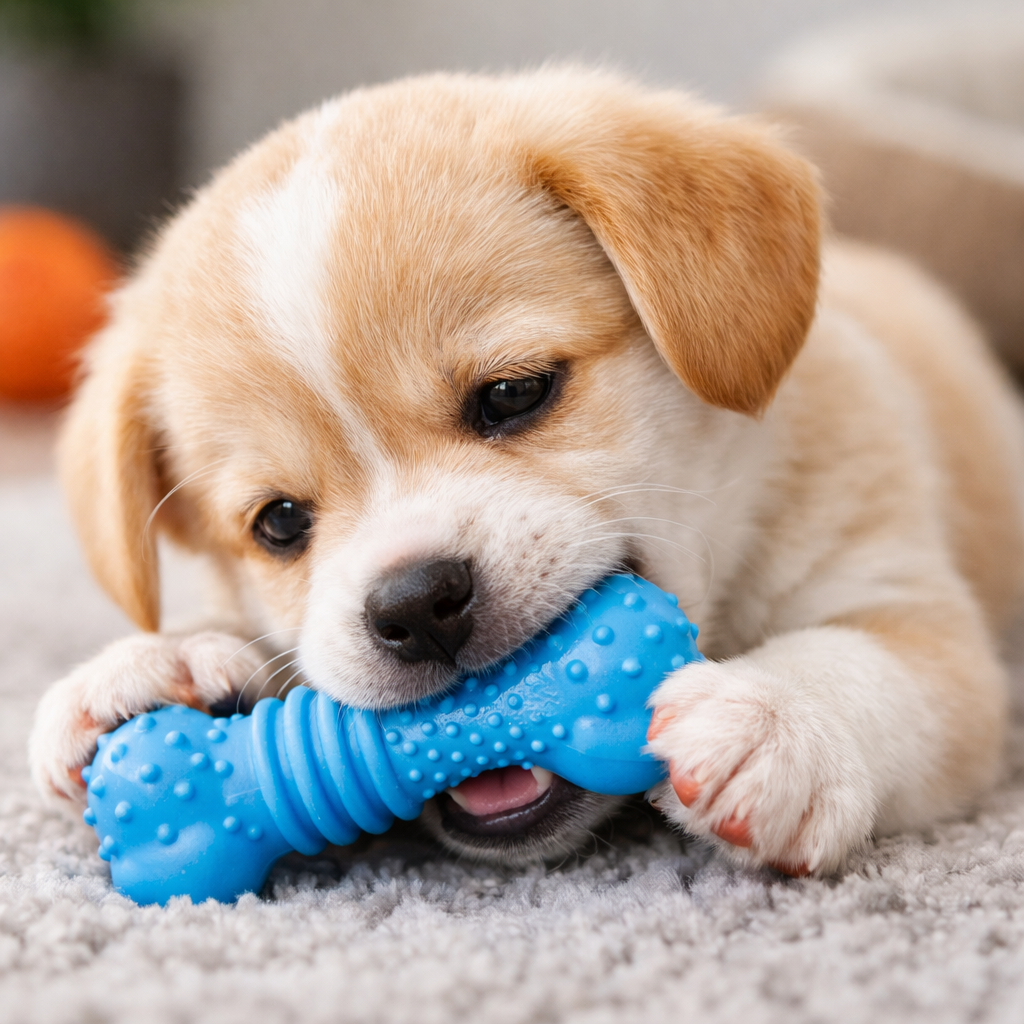
Rubber chew toys
Puppy-safe teething toys
Frozen carrots (under supervision)
Frozen washcloths
A useful rule:
Always give your puppy something better to chew than your furniture.
Step 3: Use the “Redirect and Reward” Method
When you catch your puppy chewing furniture:
❌ Don’t yell.
❌ Don’t punish.
✅ Calmly interrupt.
✅ Offer a chew toy.
✅ Praise when they chew the toy.
This teaches:
Furniture = boring Toy = rewarding
Consistency is key.
Step 4: Increase Physical Exercise
Many chewing issues disappear when puppies get enough activity.
Depending on breed and age:
Walks
Fetch
Tug games
Short training sessions
Mental exercise is equally important.
Even 10 minutes of obedience training can tire a puppy more than a long walk.
Step 5: Use Puzzle Toys
Puppies need jobs.
Food puzzles keep them occupied while satisfying natural instincts.
Popular options include:
Treat-dispensing toys
Snuffle mats
Frozen food toys
These activities reduce boredom-related chewing significantly.
I personally used the puzzle toy which really help me a lot, and i would like to recommend you
Furniture chewing is frustrating, but it’s usually a normal part of puppy development rather than bad behavior.
Most puppies chew because they’re teething, bored, curious, or looking for comfort. Once you address the underlying cause and consistently redirect them toward appropriate chew toys, the behavior improves dramatically.
Remember: success comes from prevention, redirection, and consistency—not punishment.
The sooner you teach your puppy what they’re allowed to chew, the sooner your sofa can finally recover.
If you are looking for safe and engaging toys read our article.